
Al descargar el documento usted acepta los términos establecidos en el copyright del documento y la política de uso de la plataforma.
Biblioteca
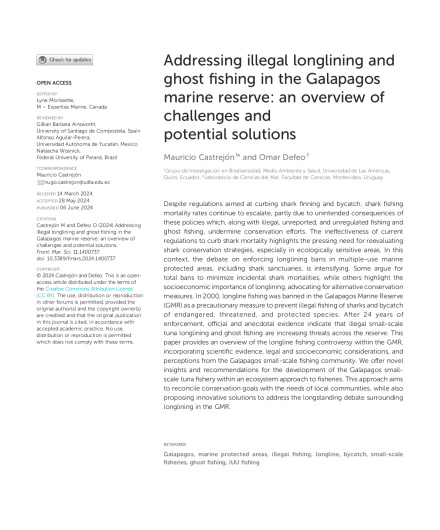
Addressing illegal longlining and ghost fishing in the Galapagos marine reserve: an overview of challenges and potential solutions

Gestión de áreas marinas
Áreas Marinas Protegidas (AMP)
Año de la publicación:
2024
Autor:
Mauricio Castrejón
Omar Defeo
Lugar de incidencia:
Ecuador
Región oceánica:
Pacífico - Sudeste
Despite regulations aimed at curbing shark finning and bycatch, shark fishing mortality rates continue to escalate, partly due to unintended consequences of these policies which, along with illegal, unreported, and unregulated fishing and ghost fishing, undermine conservation efforts. The ineffectiveness of current regulations to curb shark mortality highlights the pressing need for reevaluating shark conservation strategies, especially in ecologically sensitive areas. In this context, the debate on enforcing longlining bans in multiple-use marine protected areas, including shark sanctuaries, is intensifying. Some argue for total bans to minimize incidental shark mortalities, while others highlight the socioeconomic importance of longlining, advocating for alternative conservation measures. In 2000, longline fishing was banned in the Galapagos Marine Reserve (GMR) as a precautionary measure to prevent illegal fishing of sharks and bycatch of endangered, threatened, and protected species. After 24 years of enforcement, official and anecdotal evidence indicate that illegal small-scale tuna longlining and ghost fishing are increasing threats across the reserve. This paper provides an overview of the longline fishing controversy within the GMR, incorporating scientific evidence...
Etiquetas:
© 2024 Castrejón and Defeo. This is an openaccess article distributed under the terms of the Creative Commons Attribution License (CC BY).
La estructura de clasificación de la lista de especies Blue Five para la biblioteca digital ha sido
elaborada siguiendo criterios tanto científicos como de accesibilidad para facilitar la búsqueda de
información. En primer lugar, se organizaron las especies basándose en la taxonomía aceptada por la
comunidad científica para garantizar precisión y coherencia. Simultáneamente, se han implementado
categorías y subcategorías, considerando características morfológicas, su distribución y el uso de los
nombres comunes, con el fin de optimizar la navegación y búsqueda de datos por parte de los usuarios.
Esta metodología equilibrada asegura que la lista no solo sea científicamente rigurosa, sino también
fácil de consultar para quienes necesiten acceder a información específica de manera eficiente.
ISBN/ISSN/DOI:
https://doi.org/10.3389/fmars.2024.1400737
Idioma:
Inglés
Fuente:
Frontiers in Marine Science
Especies mencionadas:
- Categoría Blue Five: Tiburones
- Familia: Tiburones cazones
- Especies: Tiburón jaquetón sedoso (Carcharhinus falciformis) Tiburón azul (Prionace glauca)
Documentos relacionados:
Gestión de áreas marinas
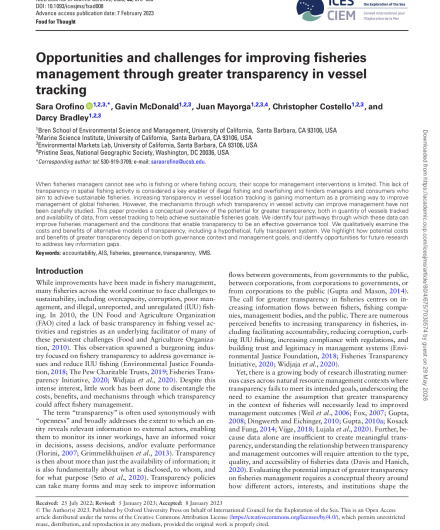
Opportunities and challenges for improving fisheries management through greater transparency...
When fisheries managers cannot see who is fishing or where fishing occurs, their scope for management interventions is limited. This...
Gestión de áreas marinas
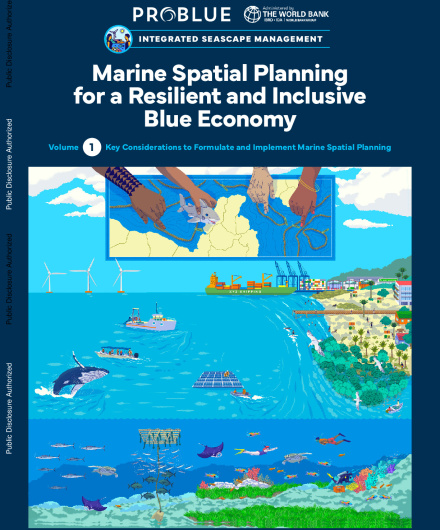
Marine spatial planning for a resilient and inclusive blue economy...
The World Bank defines the Blue Economy as the sustainable and integrated development of economic sectors in healthy oceans. It...
Gestión de áreas marinas
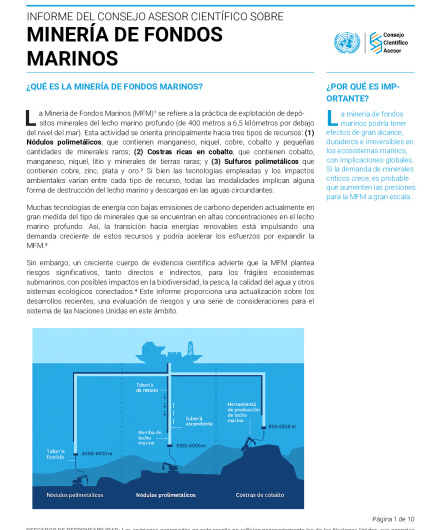
Informe del consejo asesor científico sobre minería de fondos marinos
Un creciente cuerpo de evidencia científica advierte que la MFM plantea riesgos significativos, tanto directos e indirectos, para los frágiles...