
Al descargar el documento usted acepta los términos establecidos en el copyright del documento y la política de uso de la plataforma.
Biblioteca
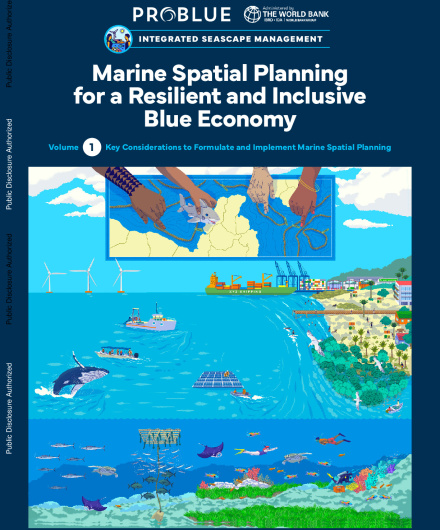
Marine spatial planning for a resilient and inclusive blue economy (Vol. 1)

Gestión de áreas marinas
Gobernanza regional
Año de la publicación:
2022
Autor:
Jacqueline Alder
Juliana Castaño Isaza
Lugar de incidencia:
Global
Región oceánica:
Cosmopolita
The World Bank defines the Blue Economy as the sustainable and integrated development of economic sectors in healthy oceans. It is a framework to realize the Sustainable Development Goals (SDGs), address climate change, protect biodiversity, and promote shared prosperity for all. Marine spatial planning (MSP) provides a needed comprehensive and integrated investment framework for the public and private sectors by dealing with upstream environmental and social issues and by giving certainty to investors to access areas and resources. The World Bank and many of its client countries are increasingly interested in using MSP to develop their marine sectors and are adding it to their investment portfolios.
However, among staff and clients there is limited understanding of the process and how to use it as an investment framework. This guidance note seeks to close these knowledge gaps
Etiquetas:
The material in this work is subject to copyright. Because The World Bank encourages dissemination of its knowledge, this work may be reproduced, in whole or in part, for noncommercial purposes as long as full attribution to this work is given.
La estructura de clasificación de la lista de especies Blue Five para la biblioteca digital ha sido
elaborada siguiendo criterios tanto científicos como de accesibilidad para facilitar la búsqueda de
información. En primer lugar, se organizaron las especies basándose en la taxonomía aceptada por la
comunidad científica para garantizar precisión y coherencia. Simultáneamente, se han implementado
categorías y subcategorías, considerando características morfológicas, su distribución y el uso de los
nombres comunes, con el fin de optimizar la navegación y búsqueda de datos por parte de los usuarios.
Esta metodología equilibrada asegura que la lista no solo sea científicamente rigurosa, sino también
fácil de consultar para quienes necesiten acceder a información específica de manera eficiente.
Editor:
World Bank
Idioma:
Inglés
Fuente:
World Bank
Documentos relacionados:
Gestión de áreas marinas
Opportunities and challenges for improving fisheries management through greater transparency...
When fisheries managers cannot see who is fishing or where fishing occurs, their scope for management interventions is limited. This...
Gestión de áreas marinas
Informe del consejo asesor científico sobre minería de fondos marinos
Un creciente cuerpo de evidencia científica advierte que la MFM plantea riesgos significativos, tanto directos e indirectos, para los frágiles...
Gestión de áreas marinas
Relative abundance and diversity of sharks and predatory fishes across...
Marine Protected Areas (MPAs) in the Tropical Eastern Pacific (TEP) support globally distinct reef fish populations, which exhibit differences between...