
Al descargar el documento usted acepta los términos establecidos en el copyright del documento y la política de uso de la plataforma.
Biblioteca
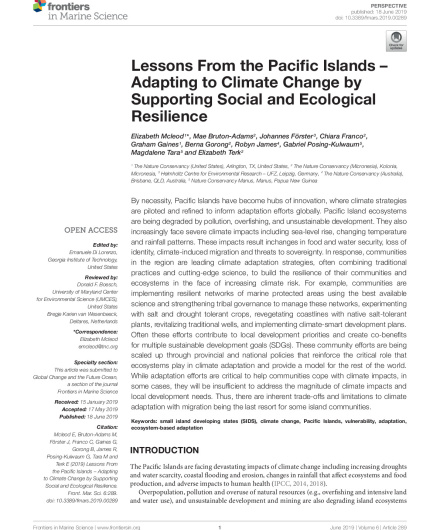
Lessons from the Pacific Islands: Adapting to climate change by supporting social and ecological resilience

Articulación multisectorial
Comunidades costeras
Año de la publicación:
2019
Autor:
Elizabeth Mcleod
Mae Bruton-Adams
Johannes Förster
Chiara Franco
Graham Gaines
Berna Gorong
Robyn James
Gabriel Posing Kulwaum
Magdalene Tara
Elizabeth Terk
Lugar de incidencia:
Global
Región oceánica:
Pacífico - Suroeste
By necessity, Pacific Islands have become hubs of innovation, where climate strategies are piloted and refined to inform adaptation efforts globally. Pacific Island ecosystems are being degraded by pollution, overfishing, and unsustainable development. They also increasingly face severe climate impacts including sea-level rise, changing temperature and rainfall patterns. These impacts result inchanges in food and water security, loss of identity, climate-induced migration and threats to sovereignty. In response, communities in the region are leading climate adaptation strategies, often combining traditional practices and cutting-edge science, to build the resilience of their communities and ecosystems in the face of increasing climate risk. For example, communities are implementing resilient networks of marine protected areas using the best available science and strengthening tribal governance to manage these networks, experimenting with salt and drought tolerant crops, revegetating coastlines with native salt-tolerant plants, revitalizing traditional wells, and implementing climate-smart development plans. Often these efforts contribute to local development priorities and create co-benefits for multiple sustainable development goals (SDGs). These community efforts are being...
Etiquetas:
Copyright © 2019 Mcleod, Bruton-Adams, Förster, Franco, Gaines, Gorong, James, Posing-Kulwaum, Tara y Terk. Este es un artículo de acceso abierto distribuido bajo los términos de la Licencia Creative Commons Atribución (CC BY) . Se permite su uso, distribución y reproducción en otros foros, siempre que se cite al autor original y al titular de los derechos de autor, y se cite la publicación original en esta revista, de acuerdo con la práctica académica aceptada. No se permite ningún uso, distribución ni reproducción que no cumpla con estos términos.
La estructura de clasificación de la lista de especies Blue Five para la biblioteca digital ha sido
elaborada siguiendo criterios tanto científicos como de accesibilidad para facilitar la búsqueda de
información. En primer lugar, se organizaron las especies basándose en la taxonomía aceptada por la
comunidad científica para garantizar precisión y coherencia. Simultáneamente, se han implementado
categorías y subcategorías, considerando características morfológicas, su distribución y el uso de los
nombres comunes, con el fin de optimizar la navegación y búsqueda de datos por parte de los usuarios.
Esta metodología equilibrada asegura que la lista no solo sea científicamente rigurosa, sino también
fácil de consultar para quienes necesiten acceder a información específica de manera eficiente.
ISBN/ISSN/DOI:
doi: 10.3389/fmars.2019.00289
Editor:
Frontiers in Marine Science
Idioma:
Inglés
Fuente:
PERSPECTIVE article
Documentos relacionados:
Articulación multisectorial
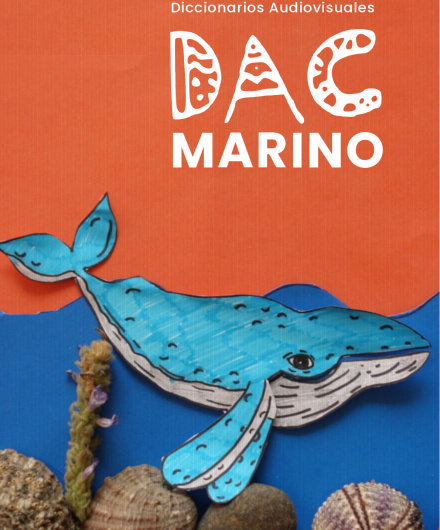
Diccionarios Audiovisuales Comunitarios Marinos
El primer Diccionario Audiovisual Comunitario sobre la riqueza marina de la costa peruana en el que los niños, niñas y...
Articulación multisectorial
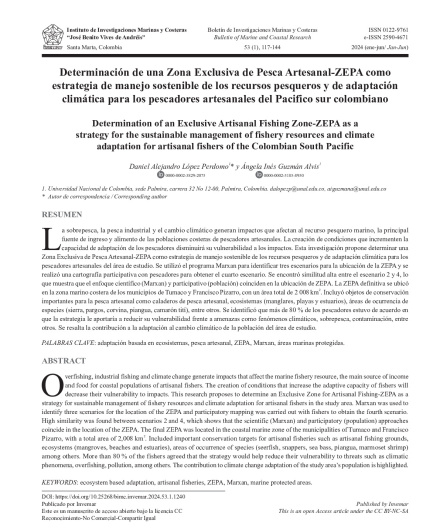
Determinación de una Zona Exclusiva de Pesca Artesanal-ZEPA como estrategia...
La sobrepesca, la pesca industrial y el cambio climático generan impactos que afectan al recurso pesquero marino, la principal fuente...
Articulación multisectorial
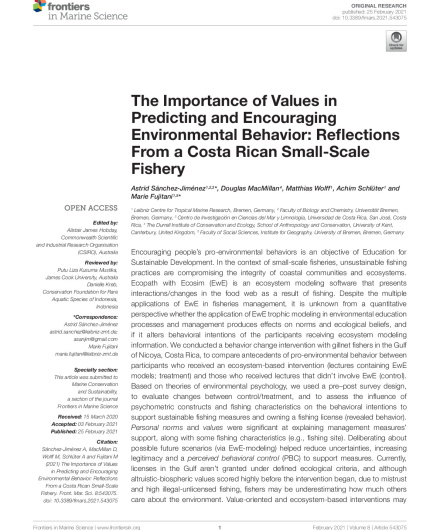
The Importance of values in predicting and encouraging environmental behavior...
Encouraging people’s pro-environmental behaviors is an objective of Education for Sustainable Development. In the context of small-scale fisheries, unsustainable fishing...