
Al descargar el documento usted acepta los términos establecidos en el copyright del documento y la política de uso de la plataforma.
Biblioteca
Ocean Decade Vision 2030 White Papers – Challenge 2: Protect and Restore Ecosystems and Biodiversity


Participación Internacional
Coordinación técnica
Año de la publicación:
2024
Autor:
Intergovernmental Oceanographic Commission of UNESCO
Lugar de incidencia:
Global
Región oceánica:
Cosmopolita
This draft White Paper has been prepared as part of the Vision 2030 process being undertaken in the framework of the UN Decade of Ocean Science for Sustainable Development. The Vision 2030 process aims to achieve a common and tangible measure of success for each of the ten Ocean Decade Challenges by 2030. From a starting point of existing initiatives underway in the Ocean Decade and beyond, and through a lens of priority user needs, the process determines priority datasets, critical gaps in science and knowledge, and needs in capacity development, infrastructure and technology required for each Challenge to ensure that it can be fulfilled by the end of the Ocean Decade in 2030. The results of the process will contribute to the scoping of future Decade Actions, identification of resource mobilization priorities, and ensuring the ongoing relevance of the Challenges over time. The process identifies achievable recommendations that can be implemented in the context of the Decade, or more broadly before 2030 to achieve the identified strategic ambition and indicators that will be used to measure progress. This draft White Paper is one of a series of ten White Papers all of which have been authored by an expert Working Group. Accompanied by a synthesis report authored by the Decade...
Etiquetas:
Attribution-ShareAlike 3.0 IGO
La estructura de clasificación de la lista de especies Blue Five para la biblioteca digital ha sido
elaborada siguiendo criterios tanto científicos como de accesibilidad para facilitar la búsqueda de
información. En primer lugar, se organizaron las especies basándose en la taxonomía aceptada por la
comunidad científica para garantizar precisión y coherencia. Simultáneamente, se han implementado
categorías y subcategorías, considerando características morfológicas, su distribución y el uso de los
nombres comunes, con el fin de optimizar la navegación y búsqueda de datos por parte de los usuarios.
Esta metodología equilibrada asegura que la lista no solo sea científicamente rigurosa, sino también
fácil de consultar para quienes necesiten acceder a información específica de manera eficiente.
ISBN/ISSN/DOI:
https://doi.org/10.25607/y60m-4329
Editor:
UNESCO-IOC
Idioma:
Inglés
Fuente:
AquaDocs
Documentos relacionados:
Participación Internacional
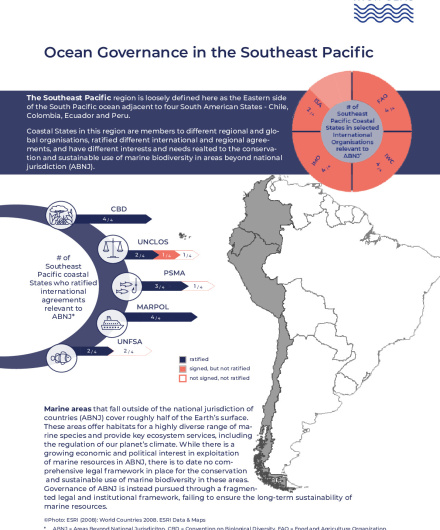
Ocean governance in the Southeast Pacific
The Southeast Pacific region is loosely defined here as the Eastern side of the South Pacific ocean adjacent to four...
Participación Internacional
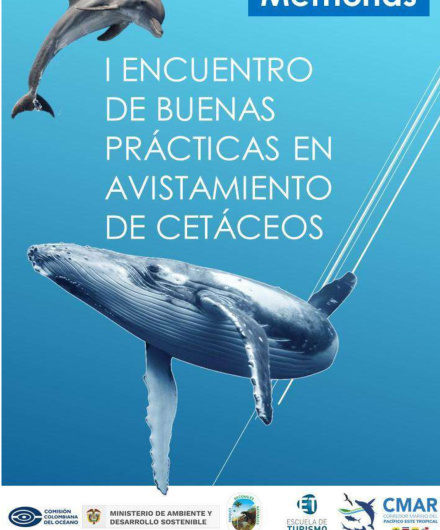
I Encuentro virtual de buenas prácticas para el avistamiento de...
Desde la mesa de trabajo de turismo y con apoyo de la mesa de biodiversidad del Comité Técnico Nacional del...
Participación Internacional
The outlook for oceans, seas and marine resources in Latin...
In preparation for the launch of the United Nations Decade of Oceans Science for Sustainable Development 2021-2030, ECLAC seeks to...