
Al descargar el documento usted acepta los términos establecidos en el copyright del documento y la política de uso de la plataforma.
Biblioteca
Revisiting "success" and "failure" of marine protected areas: a conservation scientist perspective

Gestión de áreas marinas
Áreas Marinas Protegidas (AMP)
Año de la publicación:
2018
Autor:
Sylvaine Giakoumi
Jennifer McGowan
Morena Mills
Maria Beger
Rodrigo H. Bustamante
Anthony Charles
Patrick Christie
Matthew Fox
Pablo Garcia Borboroglu
Stefan Gelcich
Paolo Guidetti
Peter Mackelworth
Joseph M. Maina
Laurence McCook
Fiorenza Micheli
Lance E. Morgan
Peter J. Mumby
Laura M. Reyes
Alan White
Kirsten Grorud-Colvert
Hugh P. Possingham
Lugar de incidencia:
Global
Región oceánica:
Cosmopolita
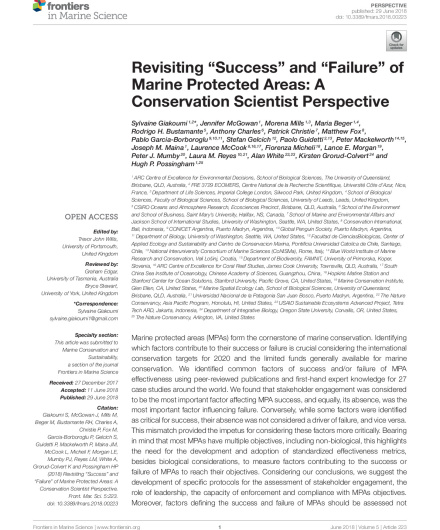
Marine protected areas (MPAs) form the cornerstone of marine conservation. Identifying which factors contribute to their success or failure is crucial considering the international conservation targets for 2020 and the limited funds generally available for marine conservation. We identified common factors of success and/or failure of MPA effectiveness using peer-reviewed publications and first-hand expert knowledge for 27 case studies around the world. We found that stakeholder engagement was considered to be the most important factor affecting MPA success, and equally, its absence, was the most important factor influencing failure. Conversely, while some factors were identified as critical for success, their absence was not considered a driver of failure, and vice versa. This mismatch provided the impetus for considering these factors more critically. Bearing in mind that most MPAs have multiple objectives, including non-biological, this highlights the need for the development and adoption of standardized effectiveness metrics, besides biological considerations, to measure factors contributing to the success or failure of MPAs to reach their objectives. Considering our conclusions, we suggest the development of specific protocols for the assessment of stakeholder engagement, the...
Etiquetas:
La estructura de clasificación de la lista de especies Blue Five para la biblioteca digital ha sido
elaborada siguiendo criterios tanto científicos como de accesibilidad para facilitar la búsqueda de
información. En primer lugar, se organizaron las especies basándose en la taxonomía aceptada por la
comunidad científica para garantizar precisión y coherencia. Simultáneamente, se han implementado
categorías y subcategorías, considerando características morfológicas, su distribución y el uso de los
nombres comunes, con el fin de optimizar la navegación y búsqueda de datos por parte de los usuarios.
Esta metodología equilibrada asegura que la lista no solo sea científicamente rigurosa, sino también
fácil de consultar para quienes necesiten acceder a información específica de manera eficiente.
ISBN/ISSN/DOI:
doi: 10.3389/fmars.2018.00223
Editor:
Frontiers in Marine Science
Idioma:
Inglés
Fuente:
PERSPECTIVE article
Documentos relacionados:
Gestión de áreas marinas
Opportunities and challenges for improving fisheries management through greater transparency...
When fisheries managers cannot see who is fishing or where fishing occurs, their scope for management interventions is limited. This...
Gestión de áreas marinas
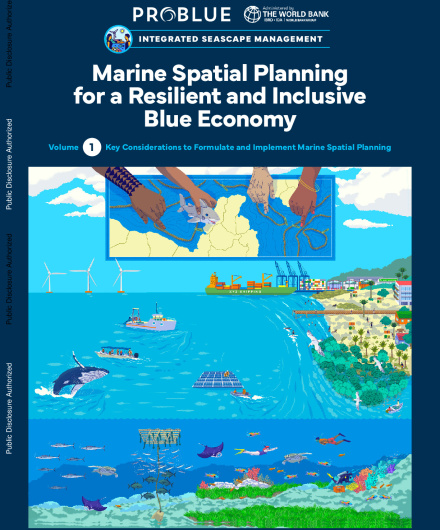
Marine spatial planning for a resilient and inclusive blue economy...
The World Bank defines the Blue Economy as the sustainable and integrated development of economic sectors in healthy oceans. It...
Gestión de áreas marinas
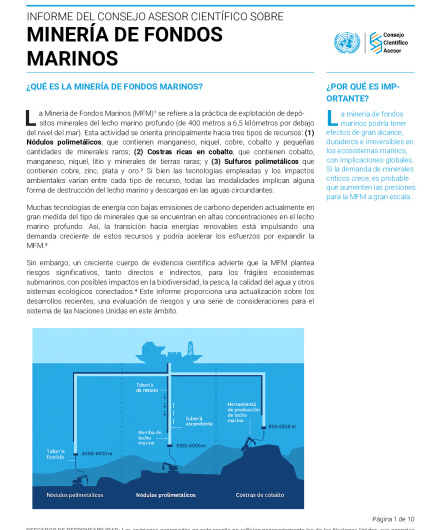
Informe del consejo asesor científico sobre minería de fondos marinos
Un creciente cuerpo de evidencia científica advierte que la MFM plantea riesgos significativos, tanto directos e indirectos, para los frágiles...