
Al descargar el documento usted acepta los términos establecidos en el copyright del documento y la política de uso de la plataforma.
Biblioteca
Evaluation of No-Take Zones in the Galapagos Marine Reserve, Zoning Plan 2000


Gestión de áreas marinas
Áreas Marinas Protegidas (AMP)
Año de la publicación:
2018
Autor:
Nicolas Moity
Lugar de incidencia:
Ecuador
Región oceánica:
Pacífico - Sudeste
The Galapagos Marine Reserve (GMR) was created in 1998, covering an area of 138,000 km2 that surrounds the islands of the Galapagos Archipelago. The GMR was created on the basis of a 40 nautical mile buffer from the smallest polygon that encompasses all islands boundaries. In 2001, the GMR was included as a Natural World Heritage Site due to its outstanding universal value. Located at the confluence of three major ocean currents, mixing warm and cold and nutrient rich waters, the GMR has an exceptional marine biodiversity, high level of endemicity, while having a primary production that supports a very high biomass of pelagic species (Wellington et al., 1984; Danulat and Edgar, 2002; Edgar et al., 2004a; Bustamante et al., 2008; Salinas de León et al., 2016; Boerder et al., 2017; Bucaram et al., 2018).
The GMR is managed as a multi-use protected area. This means that, while the general objective of the GMR is enhancing its conservation, some areas are reserved for local artisanal fishers (fishing use), some for the appreciation and enjoyment of the public (tourism use) and others are kept preserved in their natural state (conservation use). Industrial fishing is banned within the GMR, while artisanal fishing is permitted for registered fishermen of the local community. Because the...
Etiquetas:
Copyright © 2018 Moity. This is an open-access article distributed under the terms of the Creative Commons Attribution License (CC BY). The use, distribution or reproduction in other forums is permitted, provided the original author(s) and the copyright owner(s) are credited and that the original publication in this journal is cited, in accordance with accepted academic practice. No use, distribution or reproduction is permitted which does not comply with these terms.
La estructura de clasificación de la lista de especies Blue Five para la biblioteca digital ha sido
elaborada siguiendo criterios tanto científicos como de accesibilidad para facilitar la búsqueda de
información. En primer lugar, se organizaron las especies basándose en la taxonomía aceptada por la
comunidad científica para garantizar precisión y coherencia. Simultáneamente, se han implementado
categorías y subcategorías, considerando características morfológicas, su distribución y el uso de los
nombres comunes, con el fin de optimizar la navegación y búsqueda de datos por parte de los usuarios.
Esta metodología equilibrada asegura que la lista no solo sea científicamente rigurosa, sino también
fácil de consultar para quienes necesiten acceder a información específica de manera eficiente.
ISBN/ISSN/DOI:
https://doi.org/10.3389/fmars.2018.00244
Editor:
Frontiers in Marine Science
Idioma:
Inglés
Fuente:
Frontiers in Marine Science.
Documentos relacionados:
Gestión de áreas marinas
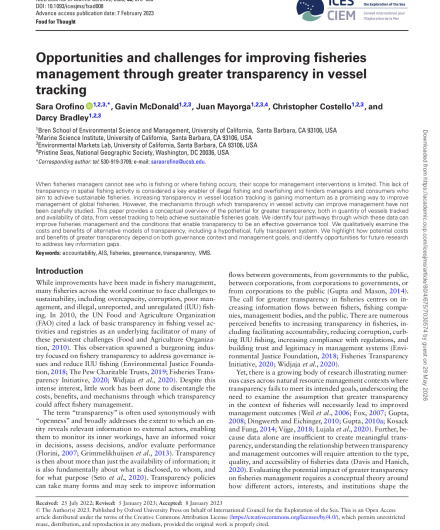
Opportunities and challenges for improving fisheries management through greater transparency...
When fisheries managers cannot see who is fishing or where fishing occurs, their scope for management interventions is limited. This...
Gestión de áreas marinas
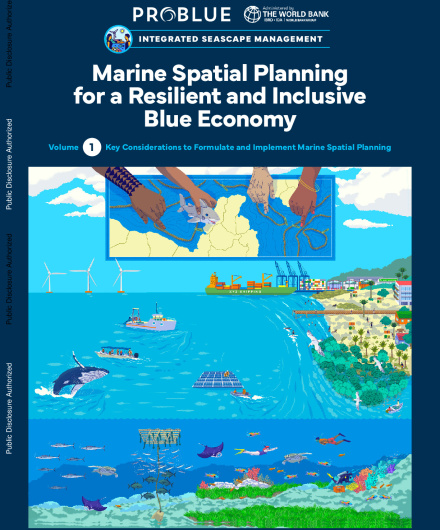
Marine spatial planning for a resilient and inclusive blue economy...
The World Bank defines the Blue Economy as the sustainable and integrated development of economic sectors in healthy oceans. It...
Gestión de áreas marinas
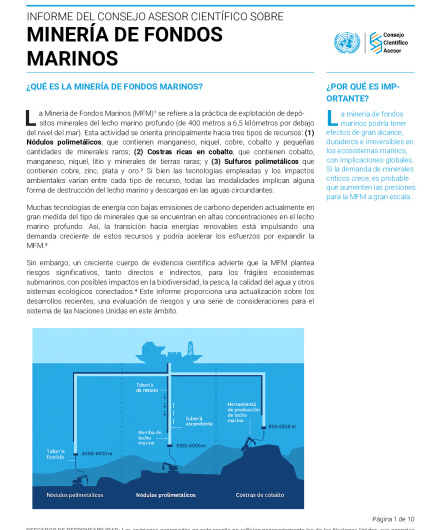
Informe del consejo asesor científico sobre minería de fondos marinos
Un creciente cuerpo de evidencia científica advierte que la MFM plantea riesgos significativos, tanto directos e indirectos, para los frágiles...