
Al descargar el documento usted acepta los términos establecidos en el copyright del documento y la política de uso de la plataforma.
Biblioteca
Oceanic primary production trend patterns along coast of Ecuador


Gestión de áreas marinas
Servicios ecosistémicos
Año de la publicación:
2021
Autor:
Nicole Chinacalle-Martínez
Elka García-Rada
Jean López-Macías
Silvia Pinoargote
Gema Loor
Javier Zevallos-Rosado
Pedro Cruz
David Pablo
Belén Andrade
Carlos Robalino-Mejía
Stephanie Añazco
Jéssica Guerrero
Andrea Intriago
Callie Veelenturf
César Peñaherrera-Palma
Lugar de incidencia:
Ecuador
Región oceánica:
Pacífico - Sudeste
Primary productivity (PP) is a vital oceanographic process generated by photoautotrophicorganisms that transform inorganic carbon into organic macronutrients and micronutrientsvia photosynthesis. While in situ studies have shed light onto the spatial and seasonal variationsof chlorophyll a (Chl a) concentration, and thus PP, in specific study sites, there are nocomprehensive monitoring programs to assess its long-term variation nor its seasonal patternsin broader areas of coastal Ecuador. The main objective of the present study is to evaluatechanges in Chl a concentration along the coast of Ecuador and examine how these changescorrespond to changes in Sea Surface Temperature (SST). Eighteen offshore and nearshoresampling sites along the Ecuadorian coast were studied over 15 years, using satellite measure-ments of MODIS-Aqua and MUR. Results show mean Chl a concentration in coastal Ecuador israther low (1.5 mg m−3) in comparison with other oceanic regions. Puerto Bolivar, Gulf ofGuayaquil and Esmeraldas were characterized by the highest mean Chl a concentration; whileGalera San Francisco Marine Reserve, Cojimies and Cabuyal were characterized by the lowest.A positive trend in Chl a concentration was detected at the southernmost (Puerto Bolivar andGulf of Guayaquil) and...
Etiquetas:
© 2021 The Author(s). This is an Open Access article distributed under the terms of the Creative Commons Attribution License (http://creativecommons.org/licenses/by/4.0/), which permitsunrestricted use, distribution, and reproduction in any medium, provided the original work is properly cited.
La estructura de clasificación de la lista de especies Blue Five para la biblioteca digital ha sido
elaborada siguiendo criterios tanto científicos como de accesibilidad para facilitar la búsqueda de
información. En primer lugar, se organizaron las especies basándose en la taxonomía aceptada por la
comunidad científica para garantizar precisión y coherencia. Simultáneamente, se han implementado
categorías y subcategorías, considerando características morfológicas, su distribución y el uso de los
nombres comunes, con el fin de optimizar la navegación y búsqueda de datos por parte de los usuarios.
Esta metodología equilibrada asegura que la lista no solo sea científicamente rigurosa, sino también
fácil de consultar para quienes necesiten acceder a información específica de manera eficiente.
ISBN/ISSN/DOI:
https://doi.org/10.1080/23766808.2021.1964915
Editor:
Neotropical Biodiversity
Idioma:
Inglés
Fuente:
Taylor & Francis
Documentos relacionados:
Gestión de áreas marinas
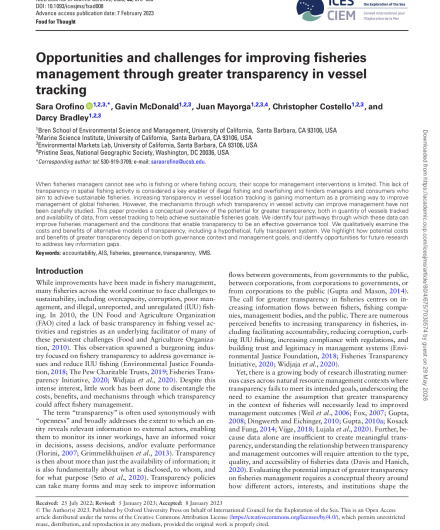
Opportunities and challenges for improving fisheries management through greater transparency...
When fisheries managers cannot see who is fishing or where fishing occurs, their scope for management interventions is limited. This...
Gestión de áreas marinas
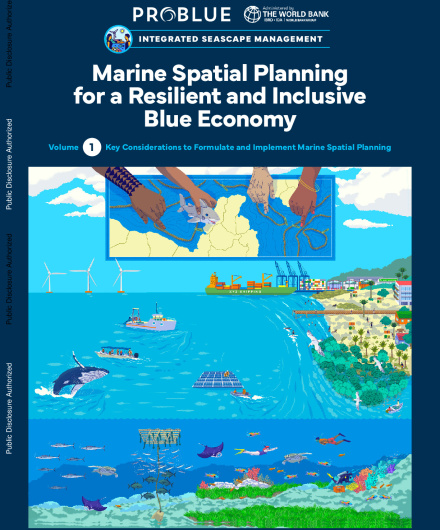
Marine spatial planning for a resilient and inclusive blue economy...
The World Bank defines the Blue Economy as the sustainable and integrated development of economic sectors in healthy oceans. It...
Gestión de áreas marinas
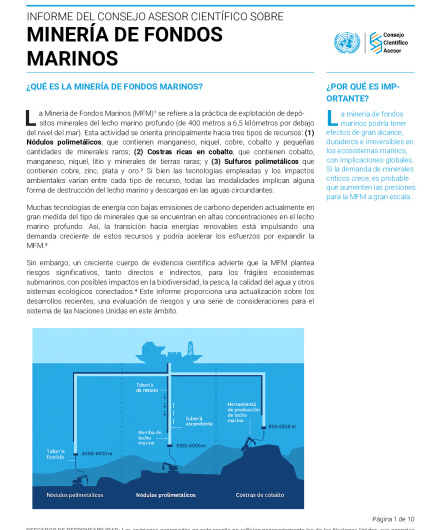
Informe del consejo asesor científico sobre minería de fondos marinos
Un creciente cuerpo de evidencia científica advierte que la MFM plantea riesgos significativos, tanto directos e indirectos, para los frágiles...