
Al descargar el documento usted acepta los términos establecidos en el copyright del documento y la política de uso de la plataforma.
Biblioteca
Galápagos upwelling driven by localized wind–front interactions


Gestión de áreas marinas
Servicios ecosistémicos
Año de la publicación:
2021
Autor:
Alexander Forryan
Alberto C. Naveira Garabato
Clément Vic
A. J. George Nurser
Alexander R. Hearn
Lugar de incidencia:
Ecuador
Región oceánica:
Pacífico - Sudeste
The Galápagos archipelago, rising from the eastern equatorial Pacific Ocean some 900 km off the South American mainland, hosts an iconic and globally significant biological hotspot. The islands are renowned for their unique wealth of endemic species, which inspired Charles Darwin’s theory of evolution and today underpins one of the largest UNESCO World Heritage Sites and Marine Reserves on Earth. The regional ecosystem is sustained by strongly seasonal oceanic upwelling events—upward surges of cool, nutrient-rich deep waters that fuel the growth of the phytoplankton upon which the entire ecosystem thrives. Yet despite its critical life-supporting role, the upwelling’s controlling factors remain undetermined. Here, we use a realistic model of the regional ocean circulation to show that the intensity of upwelling is governed by local northward winds, which generate vigorous submesoscale circulations at upper-ocean fronts to the west of the islands. These submesoscale flows drive upwelling of interior waters into the surface mixed layer. Our findings thus demonstrate that Galápagos upwelling is controlled by highly localized atmosphere–ocean interactions, and call for a focus on these processes in assessing and mitigating the regional ecosystem’s vulnerability to 21st-century...
Etiquetas:
This article is licensed under a Creative Commons Attribution 4.0 International License, which permits use, sharing, adaptation, distribution and reproduction in any medium or format, as long as you give appropriate credit to the original author(s) and the source, provide a link to the Creative Commons licence, and indicate if changes were made.
La estructura de clasificación de la lista de especies Blue Five para la biblioteca digital ha sido
elaborada siguiendo criterios tanto científicos como de accesibilidad para facilitar la búsqueda de
información. En primer lugar, se organizaron las especies basándose en la taxonomía aceptada por la
comunidad científica para garantizar precisión y coherencia. Simultáneamente, se han implementado
categorías y subcategorías, considerando características morfológicas, su distribución y el uso de los
nombres comunes, con el fin de optimizar la navegación y búsqueda de datos por parte de los usuarios.
Esta metodología equilibrada asegura que la lista no solo sea científicamente rigurosa, sino también
fácil de consultar para quienes necesiten acceder a información específica de manera eficiente.
ISBN/ISSN/DOI:
https://doi.org/10.1038/s41598-020-80609-2
Editor:
Scientific Reports
Idioma:
Inglés
Fuente:
Nature Research
Documentos relacionados:

Gestión de áreas marinas
Fishing effort dynamics around the Galápagos Marine Reserve as depicted...
The waters around the Galápagos Marine Reserve (GMR) are important fishing grounds for authorized artisanal vessels fishing within the reserve...
Gestión de áreas marinas
Opportunities and challenges for improving fisheries management through greater transparency...
When fisheries managers cannot see who is fishing or where fishing occurs, their scope for management interventions is limited. This...
Gestión de áreas marinas
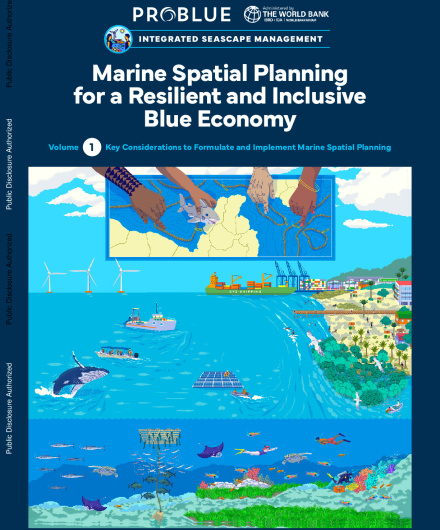
Marine spatial planning for a resilient and inclusive blue economy...
The World Bank defines the Blue Economy as the sustainable and integrated development of economic sectors in healthy oceans. It...