

Biblioteca
Región oceánica
El océano Pacífico es vasto y diverso, con características únicas en cada una de sus regiones. Sabemos que entender este contexto es fundamental para impulsar acciones de conservación más precisas y efectivas. Por eso, en esta sección de la biblioteca Save the Blue Five, te invitamos a explorar los recursos organizados según las diferentes regiones oceánicas que abordan. Queremos facilitarte una mirada más cercana a lo que ocurre en cada zona del Pacífico, resaltando las iniciativas, desafíos y aprendizajes locales que impactan a la megafauna marina. Sumérgete en esta sección y descubre cómo, desde cada rincón del océano, se está trabajando por un futuro más sostenible.
- Pacífico Noreste: El Pacífico Noreste abarca la costa occidental de América del Norte, desde Alaska hasta Baja California.
- Pacífico Noroeste: El Pacífico Noroeste incluye las aguas costeras de Japón, Corea y partes de Rusia, siendo influenciado por la corriente de Oyashio y la corriente de Kuroshio.
- Pacífico Centro Occidental: La región del Pacífico Centro Occidental abarca las áreas cercanas al sudeste asiático y las islas del Pacífico occidental.
- Pacífico Centro Oriental: El Pacífico Centro Oriental se extiende a lo largo de las costas de América Central y el norte de América del Sur.
- Pacífico Suroeste: La región del Pacífico Suroeste incluye las aguas que rodean Australia, Nueva Zelanda y las islas del Pacífico sur.
- Pacífico Sudeste: El Pacífico Sudeste abarca las costas occidentales de Sudamérica, desde Colombia hasta Chile.
- Cosmopolita: Distribución global, se encuentran en diversas partes del mundo, en lugar de estar limitados a una región específica.
363 resultados
Gestión de áreas marinas
International fisheries threaten globally endangered sharks in the Eastern Tropical...
Shark fishing, driven by the fin trade, is the primary cause of global shark population declines. Here, we present a...

Articulación multisectorial
The hidden landscape: Maritime cultural heritage of the Salas y...
The human history of the waters surrounding the Salas y Gómez and Nazca ridges is rich and culturally diverse. This...

Monitoreo de especies
Seasonal and interannual variations in the distributions of tuna-associated dolphins...
Seasonal and interannual (El Niño–La Niña) variations in dolphin distributions in the eastern tropical Pacific Ocean have not been quantified...

Intercambio de conocimientos
The movebank system for studying global animal movement and demography
Quantifying movement and demographic events of free-ranging animals is fundamental to studying their ecology, evolution and conservation. Technological advances have...
Monitoreo de especies
Current global population size, post-whaling trend and historical trajectory of...
The sperm whale lives in most deep ice-free waters of the globe. It was targeted during two periods of whaling...
Gestión de áreas marinas
Oceanic islands and climate: using a multi-criteria model of drivers...
The unique marine and terrestrial ecosystems of the Galapagos Islands are highly vulnerable to human-based drivers of change, including the...
Gestión de áreas marinas
Characteristics of animal movement and environmental data for dynamic ocean...
Dynamic ocean management (DOM) is a critical approach for protecting highly migratory species amid environmental variability and change. We conducted...
Monitoreo de especies
The effects of climatic variability on the feeding ecology of...
Climatic variability changes ocean productivity and generates systematic cascading effects in marine food webs. Studying the feeding ecology of top...
Monitoreo de especies
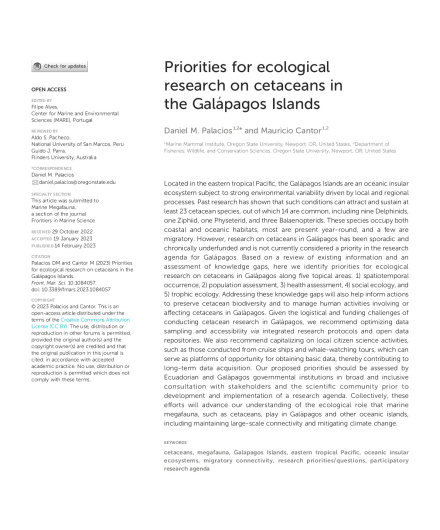
Priorities for ecological research on cetaceans in the Galápagos Islands
Located in the eastern tropical Pacific, the Galápagos Islands are an oceanic insular ecosystem subject to strong environmental variability driven...
Gestión de áreas marinas
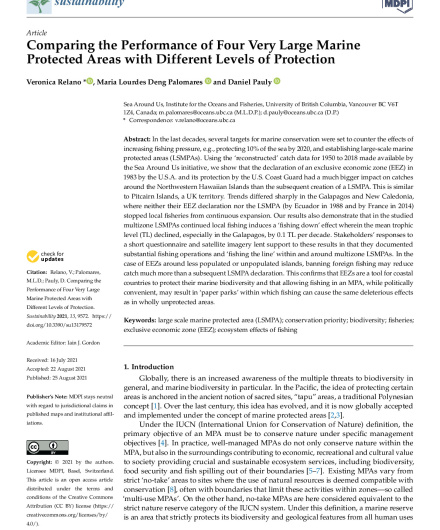
Comparing the performance of four very large marine protected areas...
In the last decades, several targets for marine conservation were set to counter the effects of increasing fishing pressure, e.g...
Gestión de áreas marinas
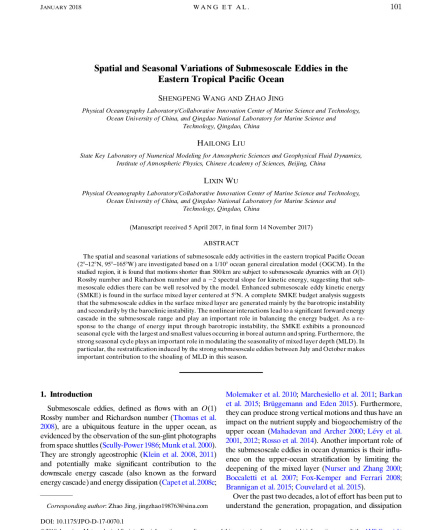
Spatial and seasonal variations of submesoscale eddies in the Eastern...
The spatial and seasonal variations of submesoscale eddy activities in the eastern tropical Pacific Ocean (28–128N, 958–1658W) are investigated based...
Gestión de áreas marinas
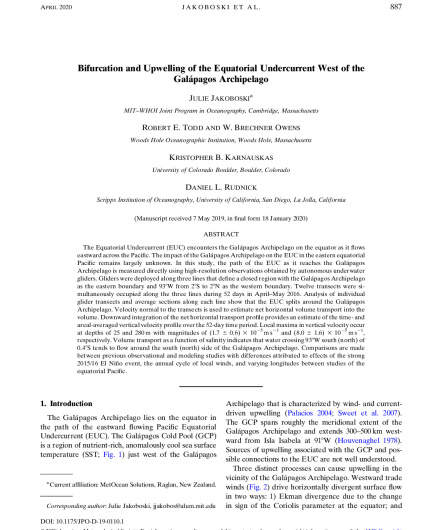
Bifurcation and upwelling of the equatorial undercurrent west of the...
The Equatorial Undercurrent (EUC) encounters the Galápagos Archipelago on the equator as it flows eastward across the Pacific. The impact...
Gestión de áreas marinas
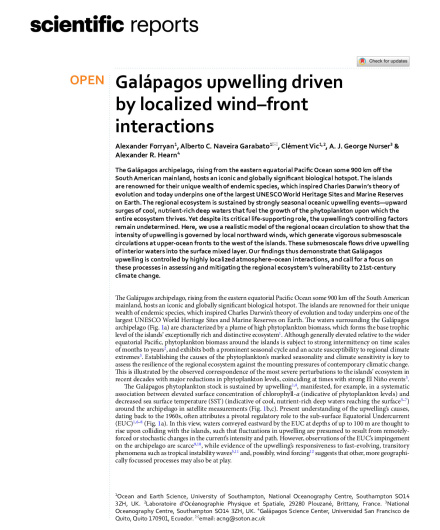
Galápagos upwelling driven by localized wind–front interactions
The Galápagos archipelago, rising from the eastern equatorial Pacific Ocean some 900 km off the South American mainland, hosts an...
Gestión de áreas marinas
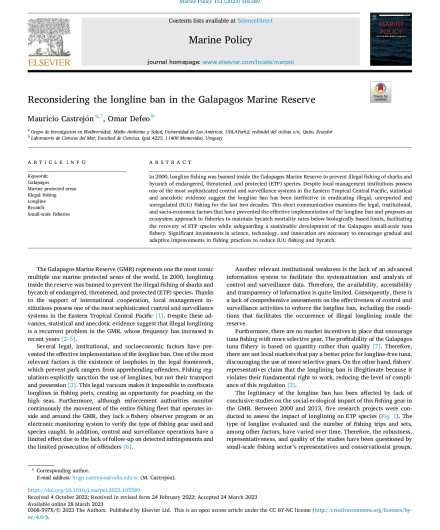
Reconsidering the longline ban in the Galapagos Marine Reserve
In 2000, longline fishing was banned inside the Galapagos Marine Reserve to prevent illegal fishing of sharks and bycatch of...

Iniciativas sostenibles
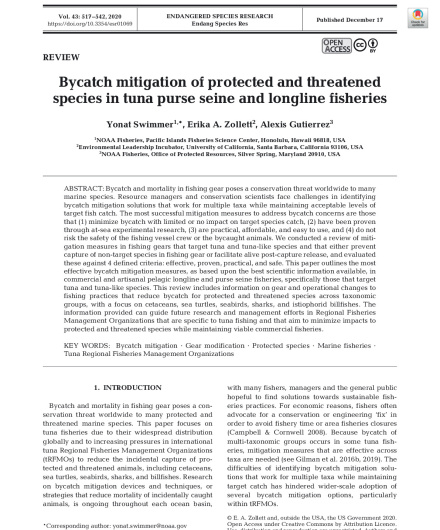
Bycatch mitigation of protected and threatened species in tuna purse...
Bycatch and mortality in fishing gear poses a conservation threat worldwide to many marine species. Resource managers and conservation scientists...

Participación Internacional
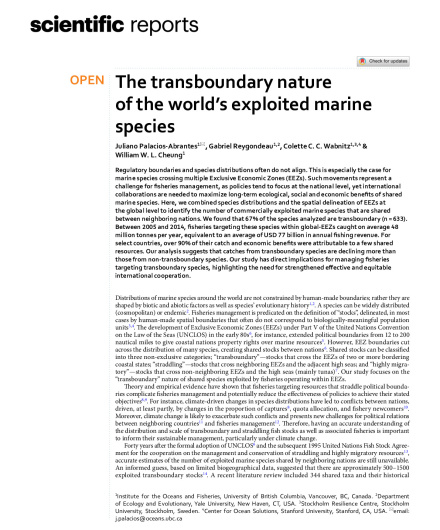
The transboundary nature of the world’s exploited marine species
Regulatory boundaries and species distributions often do not align. This is especially the case for marine species crossing multiple Exclusive...