
Al descargar el documento usted acepta los términos establecidos en el copyright del documento y la política de uso de la plataforma.
Biblioteca
Safeguarding marine life: conservation of biodiversity and ecosystems

Gestión de áreas marinas
Servicios ecosistémicos
Año de la publicación:
2022
Autor:
Delphi Ward
Jessica Melbourne Thomas
Gretta T. Pecl
Karen Evans
Madeline Green
Phillipa C. McCormack
Camilla Novaglio
Rowan Trebilco
Narissa Bax
Madeleine J. Brasier
Emma L. Cavan
Graham Edgar
Heather L. Hunt
Jan Jansen
Russ Jones
Mary‑Anne Lea
Reuben Makomere
Chris Mull
Jayson M. Semmens
Janette Shaw
Dugald Tinch
Tatiana J. Van Steveninck
Cayne Layton
Lugar de incidencia:
Global
Región oceánica:
Cosmopolita
Marine ecosystems and their associated biodiversity sustain life on Earth and hold intrinsic value. Critical marine ecosystem services include maintenance of global oxygen and carbon cycles, production of food and energy, and sustenance of human wellbeing. However marine ecosystems are swiftly being degraded due to the unsustainable use of marine environments and a rapidly changing climate. The fundamental challenge for the future is therefore to safeguard marine ecosystem biodiversity, function, and adaptive capacity whilst continuing to provide vital resources for the global population. Here, we use foresighting/hindcasting to consider two plausible futures towards 2030: a business-as-usual trajectory (i.e. continuation of current trends), and a more sustainable but technically achievable future in line with the UN Sustainable Development Goals. We identify key drivers that differentiate these alternative futures and use these to develop an action pathway towards the desirable, more sustainable future. Key to achieving the more sustainable future will be establishing integrative (i.e. across jurisdictions and sectors), adaptive management that supports equitable and sustainable stewardship of marine environments. Conserving marine ecosystems will require recalibrating our...
Etiquetas:
This article is licensed under a Creative Commons Attribution 4.0 International License, which permits use, sharing, adaptation, distribution and reproduction in any medium or format, as long as you give appropriate credit to the original author(s) and the source, provide a link to the Creative Commons licence, and indicate if changes were made. The images or other third party material in this article are included in the article’s Creative Commons licence, unless indicated otherwise in a credit line to the material. If material is not included in the article’s Creative Commons licence and your intended use is not permitted by statutory regulation or exceeds the permitted use, you will need to obtain permission directly from the copyright holder. To view a copy of this licence, visit http://creativecommons.org/licenses/by/4.0/.
La estructura de clasificación de la lista de especies Blue Five para la biblioteca digital ha sido
elaborada siguiendo criterios tanto científicos como de accesibilidad para facilitar la búsqueda de
información. En primer lugar, se organizaron las especies basándose en la taxonomía aceptada por la
comunidad científica para garantizar precisión y coherencia. Simultáneamente, se han implementado
categorías y subcategorías, considerando características morfológicas, su distribución y el uso de los
nombres comunes, con el fin de optimizar la navegación y búsqueda de datos por parte de los usuarios.
Esta metodología equilibrada asegura que la lista no solo sea científicamente rigurosa, sino también
fácil de consultar para quienes necesiten acceder a información específica de manera eficiente.
ISBN/ISSN/DOI:
https://doi.org/10.1007/s11160-022-09700-3
Editor:
Reviews in Fish Biology and Fisheries
Idioma:
Inglés
Fuente:
Springer
Documentos relacionados:
Gestión de áreas marinas
Opportunities and challenges for improving fisheries management through greater transparency...
When fisheries managers cannot see who is fishing or where fishing occurs, their scope for management interventions is limited. This...
Gestión de áreas marinas
Marine spatial planning for a resilient and inclusive blue economy...
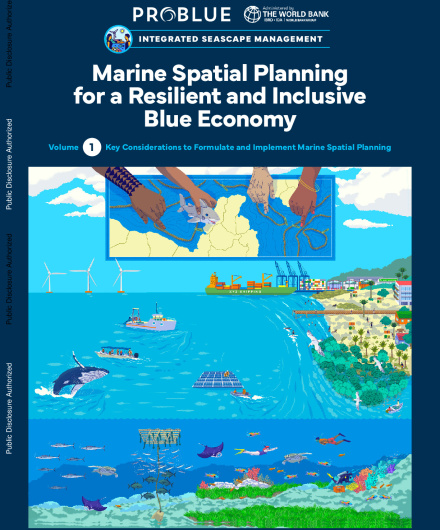
The World Bank defines the Blue Economy as the sustainable and integrated development of economic sectors in healthy oceans. It...
Gestión de áreas marinas
Informe del consejo asesor científico sobre minería de fondos marinos
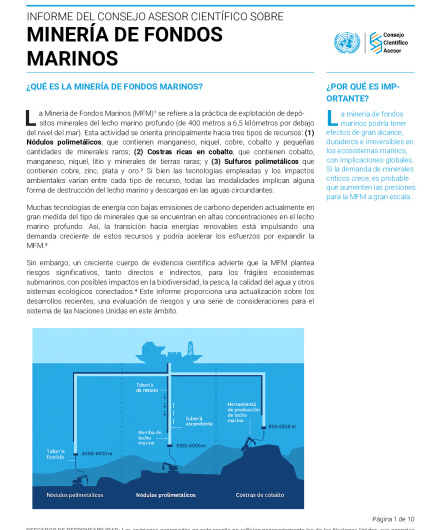
Un creciente cuerpo de evidencia científica advierte que la MFM plantea riesgos significativos, tanto directos e indirectos, para los frágiles...