
Al descargar el documento usted acepta los términos establecidos en el copyright del documento y la política de uso de la plataforma.
Biblioteca
Memory and resource tracking drive bluewhale migrations


Gestión de áreas marinas
Servicios ecosistémicos
Año de la publicación:
2019
Autor:
Briana Abrahms
Elliott L. Hazen
Ellen O. Aikens
Bruce R. Mate
Lugar de incidencia:
Estados Unidos
Región oceánica:
Pacífico - Noreste
In terrestrial systems, the green wave hypothesis posits that migrating animals can enhance foraging opportunities by tracking phenological variation in high-quality forage across space (i.e., “resource waves”). To track resource waves, animals may rely on proximate cues and/or memory of long-term average phenologies. Although there is growing evidence of resource tracking in terrestrial migrants, such drivers remain unevaluated in migratory marine megafauna. Here we present a test of the green wave hypothesis in a marine system. We compare 10 years of blue whale movement data with the timing of the spring phytoplankton bloom resulting in increased prey availability in the California Current Ecosystem, allowing us to investigate resource tracking both contemporaneously (response to proximate cues) and based on climatological conditions (memory) during migrations. Blue whales closely tracked the long-term average phenology of the spring bloom, but did not track contemporaneous green-up. In addition, blue whale foraging locations were characterized by low long-term habitat variability and high long-term productivity compared with contemporaneous measurements. Results indicate that memory of long-term average conditions may have a previously underappreciated role in driving...
Etiquetas:
Free Access
La estructura de clasificación de la lista de especies Blue Five para la biblioteca digital ha sido
elaborada siguiendo criterios tanto científicos como de accesibilidad para facilitar la búsqueda de
información. En primer lugar, se organizaron las especies basándose en la taxonomía aceptada por la
comunidad científica para garantizar precisión y coherencia. Simultáneamente, se han implementado
categorías y subcategorías, considerando características morfológicas, su distribución y el uso de los
nombres comunes, con el fin de optimizar la navegación y búsqueda de datos por parte de los usuarios.
Esta metodología equilibrada asegura que la lista no solo sea científicamente rigurosa, sino también
fácil de consultar para quienes necesiten acceder a información específica de manera eficiente.
ISBN/ISSN/DOI:
https://doi.org/10.1073/pnas.1819031116
Editor:
The Proceedings of the National Academy of Sciences (PNAS)
Idioma:
Inglés
Fuente:
PNAS
Especies mencionadas:
- Categoría Blue Five: Ballenas
- Familia: Rocuales
- Especies: Ballena azul (Balaenoptera musculus)
Documentos relacionados:
Gestión de áreas marinas
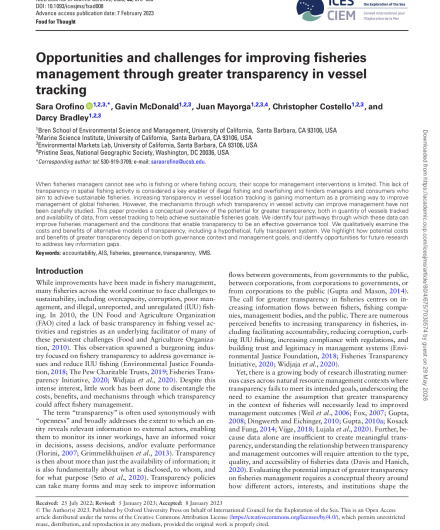
Opportunities and challenges for improving fisheries management through greater transparency...
When fisheries managers cannot see who is fishing or where fishing occurs, their scope for management interventions is limited. This...
Gestión de áreas marinas
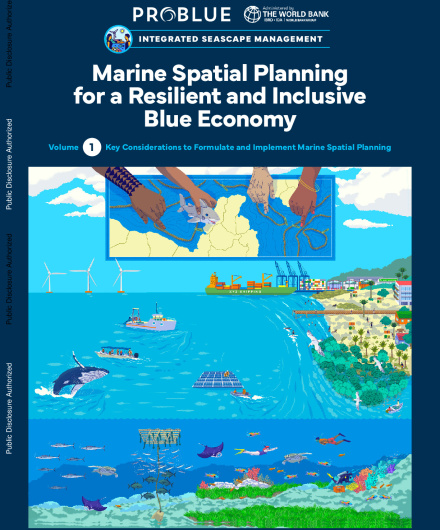
Marine spatial planning for a resilient and inclusive blue economy...
The World Bank defines the Blue Economy as the sustainable and integrated development of economic sectors in healthy oceans. It...
Gestión de áreas marinas
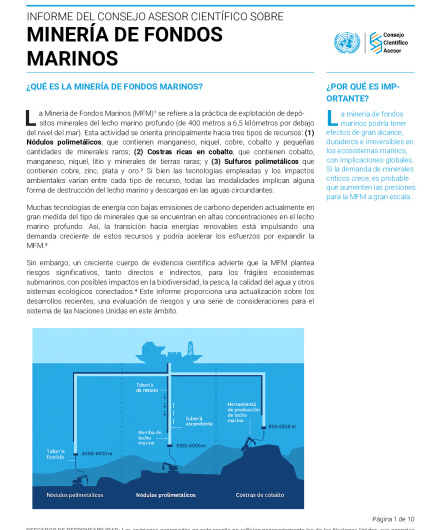
Informe del consejo asesor científico sobre minería de fondos marinos
Un creciente cuerpo de evidencia científica advierte que la MFM plantea riesgos significativos, tanto directos e indirectos, para los frágiles...